Ridley Scott’s 1982 film Blade Runner casts a long shadow. In some ways, literally.
It defined what noir sci-fi would look like for years to come: the rain, the dramatic lighting, the trenchcoats. Denis Villeneuve delivered a worthy sequel in 2017 with Blade Runner 2049, but for some fans nothing will ever touch the original.
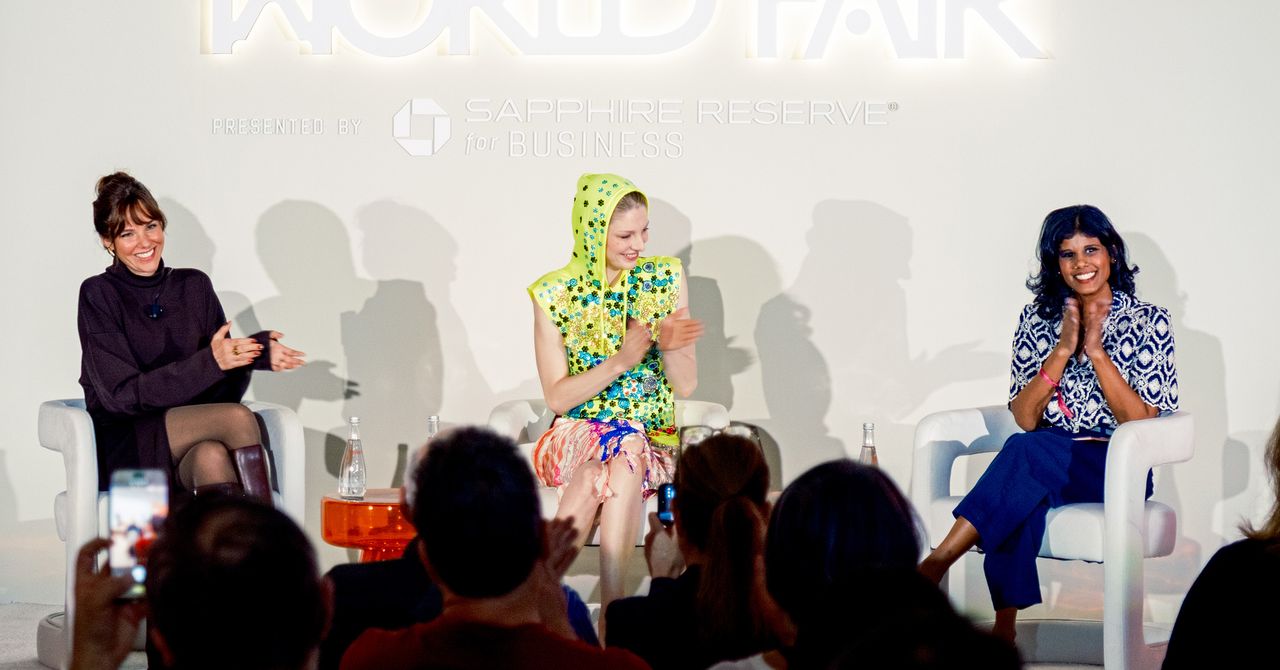
Silka Luisa tries not to think about these things. “If I didn’t love Blade Runner this would’ve been way too hard,” the showrunner of Prime Video’s limited series Blade Runner 2099 said Wednesday during the WIRED World Fair event in Miami.
Luisa’s show differs quite a bit from its forebears. It still has the humanoids known as replicants, but in 2099’s future, they’re the ones calling the shots, giving humans the grunt work they used to do. Set 80 years after Blade Runner and 50 years after 2049, it focuses on a replicant Blade Runner, Olwen (Michelle Yeoh), on the search for rogue agents. Along the way she gets teamed up with Cora, played by Hunter Schafer, a human pretending to be a replicant to survive. (We’d say more, but the show doesn’t premiere until November 25, and, you know, spoilers.)
If this vision of dystopia sounds too familiar for comfort, Luisa hears you. When asked about how she chose to tackle the franchise, she noted that in the last couple of decades, “the present caught up to the films” as megacorporations and environmental collapse became realities in ways they weren’t in 1982. The point of her Blade Runner is to show what happens in a post-revolution world and “not focus on the fears we’re living with right now.”
That doesn’t mean that Blade Runner 2099 is entirely a dystopian tale. For Luisa, it’s about showing the “silver linings” of a world run by replicants. To do that, she picks up on some of the environmental themes touched on in Villeneuve’s movie, which showed how Earth had been wrecked by human activity. Blade Runner 2099 depicts a world that replicants are trying to bring back from the brink of ecological collapse using the skills they gained when they were working for humans. “They’re able to rehabilitate the planet,” Luisa says.
Blade Runner 2099 also gave Schafer a chance to flex some action-hero muscles—something she’d never done before and something her costar, Yeoh, has been doing for decades. Schafer jumped right in, running and diving across the screen from the pilot onward. For the fight scenes, though, she got some help from Yeoh.
“It was really physically demanding,” Schafer said during WIRED’s conference. “I felt so lucky to have Michelle Yeoh, who is the fucking master, as a scene partner.”
But back to that shadow cast by Scott’s original adaptation of Philip K. Dick’s novel Do Androids Dream of Electric Sheep? In addition to being a sci-fi classic, it also created a whole new template for what dystopian fiction could look like. It broods.
Luisa insists there’s a little more hope in hers—and hopes audiences see that, too. She also wants audiences to know that replicants aren’t the same as the AI bots humans are fixated on in 2026. “They’re more akin to us,” she said. “AI, I just don’t have that same sympathy for.” Hear that, Claude?